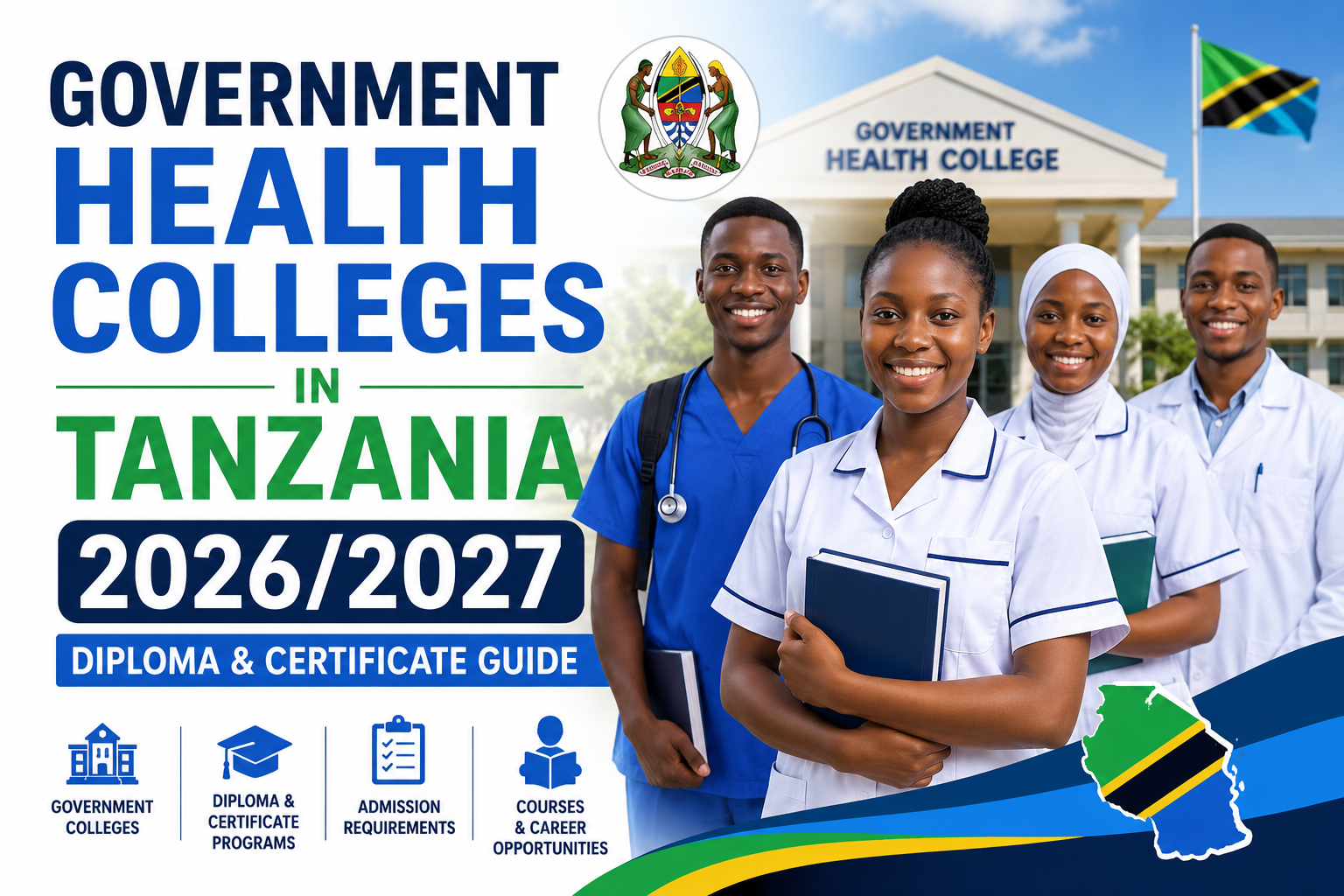
“If you are looking for the official list of Government Health Colleges in Tanzania, you have come to the right place. The healthcare sector in Tanzania is expanding rapidly, creating a massive demand for qualified medical professionals, including nurses, clinical officers, pharmacists, and laboratory technicians. If you are aspiring to build a stable and rewarding career in medicine, securing admission into a government health college for the 2026/2027 academic year is one of the best choices you can make.”
Why Study Health and Medical Courses in Tanzania?
Pursuing a medical career in Tanzania comes with numerous long-term advantages, particularly if you study at a state-certified institution. Here is why this path is highly recommended:
- High Employability: Medical fields such as Nursing, Clinical Medicine, Pharmacy, and Laboratory Sciences currently hold the highest employment rates in the country’s public and private sectors.
- Affordable Tuition: Government-owned institutions offer significantly subsidized tuition rates compared to private medical schools.
- Hands-on Training: Students gain direct access to government laboratories, modern equipment, and highly crowded public hospitals, ensuring strong practical experience before graduation.
Admission Requirements for 2026/2027 (Diploma & Certificate)
Before submitting your application through the National Council for Technical and Vocational Education and Training (NACTVET), ensure you meet the minimum academic thresholds established by the Ministry of Health.
1. Certificate Programs (NTA Level 4 – 5)
- Academic Qualification: You must possess a Certificate of Secondary Education Examination (CSEE) / Ordinary Level (“O” Level).
- Subject Performance: Pass grades in core science subjects (Biology, Chemistry, and Physics) are mandatory, with the specific cut-off points varying based on the competitiveness of the chosen medical program.
2. Diploma Programs (NTA Level 6)
- Direct Entry: A relevant NTA Level 5 Certificate from a recognized health institution, along with valid “O” Level passes as required by the institutional guidelines.
- Equivalent Entry: Specific institutional guidelines apply regarding the equivalent grades required from secondary school graduates.
How to Choose the Right Health College in Tanzania
Selecting the right training center sets the foundation for your career. Before locking in your choices on your application portal, cross-verify the college using these four pillars of quality:
- Registration & Accreditation Status: Verify that the college is fully registered and accredited by NACTVET. Avoid colleges stuck in the preliminary “Accreditation Candidacy” phase if you want an undisputed certificate. Look for:
- Full Accreditation
- Full Registration
- Provisional Registration
- Geographical Location & Cost of Living: Calculate the overall cost of living, transport, and student accommodation surrounding the campus.
- Course Specialization: Ensure the specific campus specializes deeply in your targeted line of study (e.g., Clinical Medicine vs. Environmental Health).
- Training Infrastructure: A great medical school must possess well-stocked modern laboratories and structured training equipment.
List of Health Colleges in Tanzania (By Region)
Below is a curated list of prominent medical and health training colleges in Tanzania offering Diploma and Certificate programs for the 2026/2027 academic window:
Dar es Salaam Region
- Muhimbili College of Health and Allied Sciences – Ilala
- City College of Health and Allied Sciences – Temeke
- City College of Health and Allied Sciences – Ilala Campus
- Kam College of Health Sciences – Kinondoni
- Mount Ukombozi Health Sciences Training Centre
- Kigamboni City College of Health and Allied Sciences
- Kilenzi Memorial College of Health and Allied Sciences
- Zango College of Health and Allied Sciences
Mbeya Region
- St. John College of Health – Mbeya City
- Mbalizi Institute of Health Sciences – Mbeya
- Uyole Health Sciences Institute – Mbeya
- Amenye Health Training Institute – Mbeya
- Mbeya College of Health and Allied Sciences
- St. Joseph Health Training College – Mbeya
- Southern Highlands College of Health and Allied Sciences
Mwanza Region
- Mwanza College of Health and Allied Sciences
- Buhongwa College of Health and Allied Sciences
- Tandabui Institute of Health Sciences and Technology
- Mkolani Foundation Health Sciences Training Institute
- City College of Health and Allied Sciences – Mwanza Campus
Dodoma Region
- Dodoma Institute of Health and Allied Sciences
- Decca College of Health and Allied Sciences – Dodoma
- Decca College – Nala Campus
- Janesa Institute of Health and Allied Sciences
Morogoro Region
- Morogoro College of Health Science
- Berega Institute of Health Sciences
- St. Alvin Institute of Health and Allied Sciences
Tanga Region
- Tanga College of Health and Allied Sciences
- Muheza College of Health and Allied Sciences
- St. Augustine Muheza Institute of Health Sciences
- Besha Health Training Institute
High-Demand Pharmacy Programs in Tanzania
For students specifically targeting Pharmaceutical Sciences (Pharmacy) or medicine-related pathways, these verified colleges stand out for the 2026/2027 academic cycle:
- Blue Pharma College of Health – Singida
- Muhimbili College of Health and Allied Sciences – Dar es Salaam
- St. John College of Health – Mbeya
- Mbalizi Institute of Health Sciences – Mbeya
- Tanga College of Health and Allied Sciences
Important Advisory Note: Pharmacy programs can vary greatly in curriculum depth and field practical placements between institutions. Always perform due diligence directly with NACTVET before submitting applications.
Frequently Asked Questions (FAQs)
Are all the colleges listed above strictly owned by the government?
No. The comprehensive nationwide listings include a mix of public (government) institutions, private entities, and faith-based organization (FBO) facilities.
Which medical courses offer the highest employment rates in Tanzania?
Courses that constantly experience severe staff shortages and huge placement vacancies in local health centers include Nursing, Clinical Medicine, Pharmacy, and Laboratory Sciences.
Can I apply to more than one medical college?
Yes. Applications follow a systematic centralized admission structure that lets you list multiple institutional preferences depending on your grades.
Final Thoughts
Choosing a medical pathway is a monumental step toward a life-saving career. Before lodging your application profile for the 2026/2027 enrollment pool, research the institution’s localized reputation, geographical suitability, and infrastructure setups. Make sure your academic combinations squarely match the NACTVET regulations to ensure a smooth admission process!